


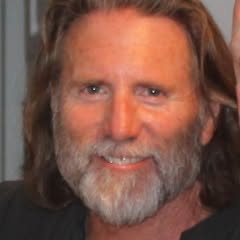
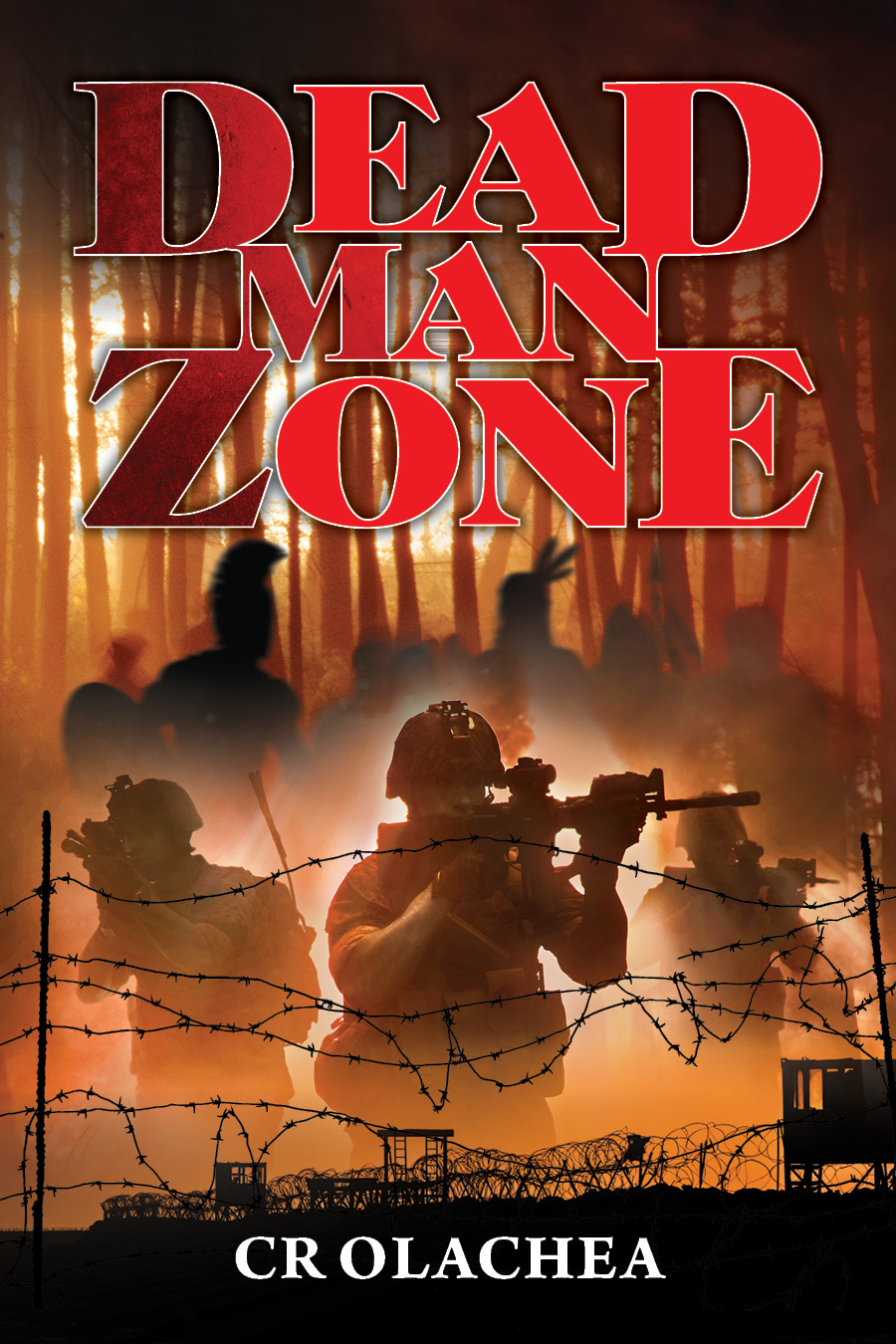
To start the new year right, my fascinating Tell Me Your Story guest is Charles R. Olachea. Commissioned a Second Lieutenant in 1982 as a Tactical Intelligence Officer, Charlie’s fast-paced stint in the army with tours in Korea and Honduras prepared him for a life of adventure. In 1987, he joined the DEA and spent 28 years as a U.S. Drug Enforcement Administration Special Agent. His cases took him all over the United States and across the world to Nepal, Canada, Guatemala, Colombia and Mexico. CR Olachea’s debut book, titled Dead Man Zone, introduces protagonist Rip Razorton, and is based on his experiences while serving in Korea. Check out Charlie’s website at http://crolachea.com
Cowboy Up
Charles R. Olachea
As I’m looking out the front windshield of life, pushing seventy years old, it’s the rear-view mirror that gets my attention. Peering into it, I see a reflection of me—only it’s not. The image I see is the person I’m named after, my father, Charles J. Olachea. An alcoholic, he loomed large in our dysfunctional family, and like most alcoholics, his grip on the bottle took center stage. Wandering backstage were his three sons and a love-starved wife named Sunda Dawn, each trying to weather the whirlwind the best way they knew how.
My parents met in a bar in San Mateo, California. As a result, my mother became pregnant with twins. Born prematurely and clinging to life in a small hospital in Mesa, Arizona, I entered the world first. Five minutes later came my twin brother, Curtis. Three years later my youngest brother, Britt, was born.
Immigrating from Baja and Chihuahua, Mexico, the Olachea clan of Basque descent settled in Tempe, Arizona, working primarily as ranch hands and in the early 1960s moved en mass to San Jose, California.
Too young to understand the dynamics of living with a progressive alcoholic during the early years of my life, I still have fond memories of watching Lawrence Welk with my non-English-speaking grandparents on a black-and-white television—an exciting new invention at the time—eating homemade Mexican food and gathering with extended family every Christmas Eve at my sweet aunt’s house. However, without fail, excessive consumption of alcohol usually resulted in the celebration ending in a fight involving my dad and a male in-law.
During these formative years living in the golden state, I learned FAMILY was important often stressed to us kids from an inebriated father. The presentation may not have been the best, but we all got the message, and to this day, it still rings true and is not forgotten.
At the end of the decade, trying to save their marriage, our parents moved us to Idaho Falls, Idaho. Dad worked as a foreman for a local gas company. Mom stayed at home as a housewife. Domestic bliss was non-existent. Conflict escalated amidst infidelity on both sides. So did my father’s drinking.
After six months, we moved to Shelley, Idaho, a small farming community known for its Russett potatoes. Nothing changed. The fighting continued. Three years later, my parents divorced. My father moved to Arizona leaving my mother to raise three sons by herself with no child support.
Looking for love in all the wrong places, my mother spiraled into a deep depression of torment. Unable to cope, she left her children, walked into the middle of a shallow river, and shot herself in the heart ending her misery.
Dad returned to Shelley and his three sons still controlled by a beer can and a square bottle. Living with an alcoholic wasn’t easy. We lived in an open house with revolving doors that entertained misfits and strangers, most of them alcoholics. Moreover, there was always a question if dad would even make it back home in one piece after leaving the house. He was either going to come back intact, injured in a drunk driving accident, busted up from a fight, or blown up from a gas leak. It was a crapshoot. We just figured he’d eventually come back—in a body bag.
Don’t get me wrong. Not everything about my dad was bad. He was a flawed human like us all, but he had a big, big, heart, had a sense of humor and taught us invaluable life lessons that imparted certain values or convictions he felt significant, family being one of them as I mentioned before. He taught us to root for the underdog and to help those less fortunate; that you get back up when life knocked you down; and ‘when the going gets tough, the tough get going.’ That’s when he’d convey two words—”Cowboy Up.”
My father stressed two principles he fervently lived by: Service to your country and Respect for the flag and what it represented—Freedom. These two convictions resonated with me and my brothers from an early age. A proud American, he lived what he preached by serving in the Navy as a gunner’s mate during the Korean War. He was not alone. Virtually all my male relatives served in the military in every major war from 1941 to 1975 representing every branch of the services, namely the Army, Air Force and Marines. One received the silver star for gallantry in WWII. It’s a legacy I am proud of and one that influenced my own military service.
In the late 70s after high school, my twin brother and I attended Idaho State University in Pocatello, Idaho. We joined ROTC and wore the OD green uniform of the Unites States Army. We did so despite the program being unpopular at the time following the controversial conclusion of the Vietnam War.
In 1981, we were commissioned as Second Lieutenants in the “green machine,” both assigned with a MOS (Military Occupational Specialty) in Military Intelligence.
Following officer basic and intelligence schools at Fort Huachuca, Arizona, I received orders for Korea. I landed in Osan, Korea, on a cold winter’s day. Culture shock was an understatement. It also didn’t help that a foreign adversary, communist North Korea (NK), was in the habit of breaking the “Armistice Agreement,” killing Americans in the process.
I was assigned to the Second Infantry Division as the Third Brigade Assistant S-2. My primary responsibility was to monitor the “safety and security” of the ambush and recon patrols conducted in the U.S. sector of the so-called demilitarized zone (DMZ). The broader mission for our S-2 shop was to collect “intelligence” regarding North Korea’s capabilities and intentions. Most of our collection efforts took place on the DMZ in reaction to NK’s intrusions into our sector of the DMZ, a dangerous place to defend and monitor.
After one year in Korea, I came back to the “World” a seasoned soldier and a changed man. Eventually, I left military service and joined the Drug Enforcement Administration (DEA) as a Special Agent.
My twenty-eight years with DEA were an adventure but I never forgot my one year in Korea: the fear, sense of duty, the mission, my fellow soldiers, and the chronic stress I came home with. After ten years “running the streets,” the residue of Korea came back to haunt me. My coping mechanism, a spiced rum called “Captain Morgan.” My father taught me well.
Twenty years later. He got sober. So, did I.
I was like my father in more ways than one.
The man in the rear-view mirror came into focus. It was me after all.
COWBOY UP!
More Places to Go
Donis on Facebook
Type M for Murder