


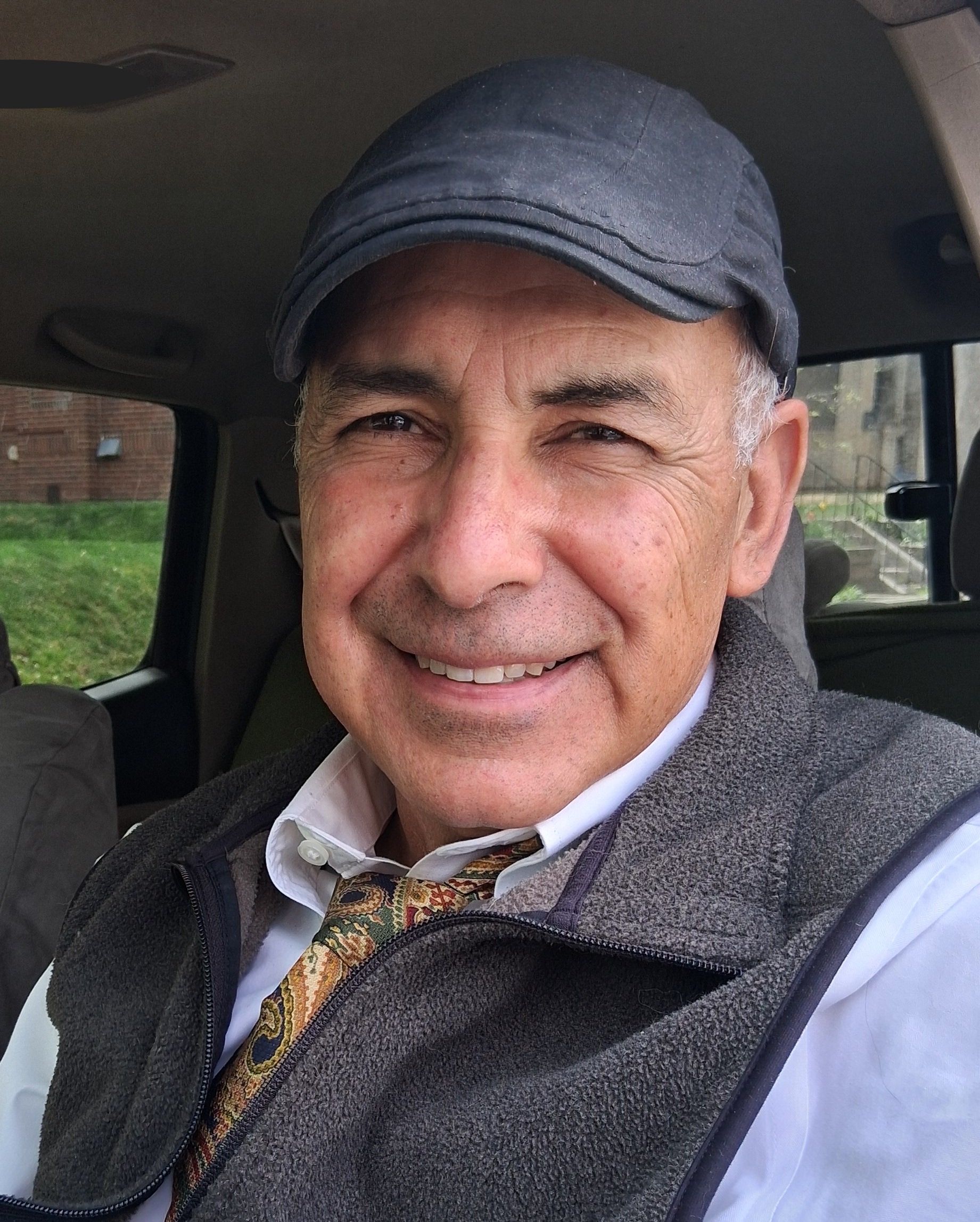
My entirely wonderful and brave Tell Me Your Story guest this month is Mario Acevedo, the author of The Nymphos of Rocky Flats in the national bestselling Felix Gomez detective-vampire series, the YA humor thriller University of Doom; the cartoon memoir Cats in Quarantine, and co-author of the Western novel Luther, Wyoming. His work has won two International Latino Book Awards, a Colorado Book Award, and has appeared in numerous anthologies to include: Denver Noir; ¡El Porvenir, Ya!; Shadow Atlas; A Fistful of Dinosaurs; Straight Outta Deadwood; Psi-Wars; and It Came From The Multiplex. He was the editor of Ramas y Raíces: the Best of CALMA, an award-winning anthology from the Colorado Alliance of Latino Mentors and Authors. Mario was the Rocky Mountain Fiction Writers 2009 Writer of the Year, and he taught in the Regis University Mile-High MFA program and Lighthouse Writers Workshops. Check out Mario’s work at https://www.marioacevedo.com/p/books.htmlhttps://www.marioacevedo.com/p/books.html
Mario Acevedo

When I was asked by Donis Casey to contribute to her blog, her suggestions were to share my life experiences and how those experiences shaped what I write. She provided links to previous posts that had most resonated with her audience, which were those drawing upon personal trauma. I could write about that, but won’t for several reasons. Something horrible happened in my family forty-one years ago, something so terrible and shameful that we each kept the pain to ourselves. Only recently has my sister decided to share her experience in public. I keep quiet because to even mention it opens the door for a conversation I don’t want to have. Moreover, everyone is touched by tragedy. I won’t measure what happened to me against what others have suffered: the loss of a child, a family member, or a cherished friend taken in an accident, by murder, suicide, killed in war, or at the end of a prolonged illness.
But there is one experience from my past that did affect my writing. For a while I was homeless. Not living under a bridge homeless but was what bureaucrats call “sheltered homeless.” At the time, I got laid off, as for the second time in my professional life I’d been caught in what’s called a “Reduction-in-Force” or RIF. The first time happened when I was a Federal contractor and a victim of “Re-imaging Government.” (Doge is nothing new.) I was one of thousands thrown to the curb and competing against those same thousands for jobs in a shrinking field. I applied to work everywhere, even to positions in the UK and Guam. My stack of rejection letters grew to a pile three-inches thick. In the meantime, with a family to support, I did anything to bring in money: deliver newspapers and pizzas, fix forklifts, help in home demolition. Deciding to retool my skill set, I started on a master’s in IT, thinking, this is one occupation that is layoff proof. Fast-forward five years, the internet bubble burst. I returned from vacation to a voice message that I’d been let go. At the time, I was recently divorced and on my own. Since this wasn’t my first turn in the unemployment rodeo, I took stock of my finances and realized that I’d run out of money in a few months. Then what?
I turned to my friend Erika, a woman I had briefly dated, but things in the romance department didn’t work out so we decided to remain friends. As for a place to stay, the best she could do was clear space in her basement. The arrangement would be temporary and contingent on that I seek employment that paid enough for me to move out. As part of the arrangement, I had to cover the electric, gas, and water bills. So I was back at it, me—a former Army officer and pilot, with a bachelor’s of engineering degree and a post-graduate IT degree—back doing whatever to keep a roof over my head.
Let me inject my opinion about the homeless issue, or the unhoused, or “those experiencing homelessness”—politicians and activists play word games to imply progress on a problem without actually doing anything to improve the situation. What goes unsaid is that almost all of us hit a rough patch in our life or know someone who has. A family member gets divorced and needs a place to stay. Or a friend lost a job. Years back, a woman who sat for my kids got in a financial jam and to help her out, I wrote her a check for a thousand dollars, knowing that despite her promises to pay me back, she wouldn’t. It wasn’t that she didn’t apply herself, it was that she was in a tight spot and I knew it would take her time to get through this. There were other examples but you get the point.
What few managing homelessness want to discuss are behavioral issues. I’m sure that most of those living on the street had at one time been offered a place to stay with family or friends. But disruptive behavior, caused by drugs and/or alcohol abuse, mental health issues, aggravated by an unwillingness to address those problems caused their welcome to run out. With my friend Erika, the unspoken and informal contract between us was that I’d behave and it wasn’t necessary to elaborate on what that meant. I was a guest in her home, and I had to act accordingly.
What does this have to do with my writing? Bottomline: I wrote the manuscript for my debut novel, The Nymphos of Rocky Flats, while living in the basement of my ex-girlfriend’s house. My thinking then was that no matter what crap I was dealing with, at least I could work on my book. Months later, while attending the Rocky Mountain Fiction Writers Writing Conference, I gave my novel’s elevator pitch to an agent…in an elevator. The following November, I got a call that I had been offered a “Very Nice” three-book deal. The advance was enough for me to move out of Erika’s basement and into a duplex rental. Looking back on the circumstances, it seems like I was rolling the dice on one hell of a crapshoot. But at the time, typing away on my manuscript, as I built my vampire world paragraph by paragraph, was what gave my life direction and meaning in a period of great uncertainty when I didn’t see any other way forward. This is my story.
April 20th, 2026
What a wonderful and inspiring story. With grit and persistence you made a lemon meringue pie out of the lemon life handed you.
Most people would have just …watched TV. I’m sure you have a few people to think like Erika who helped you when you were down but remember to thank yourself. I hope your career continues to flourish.